

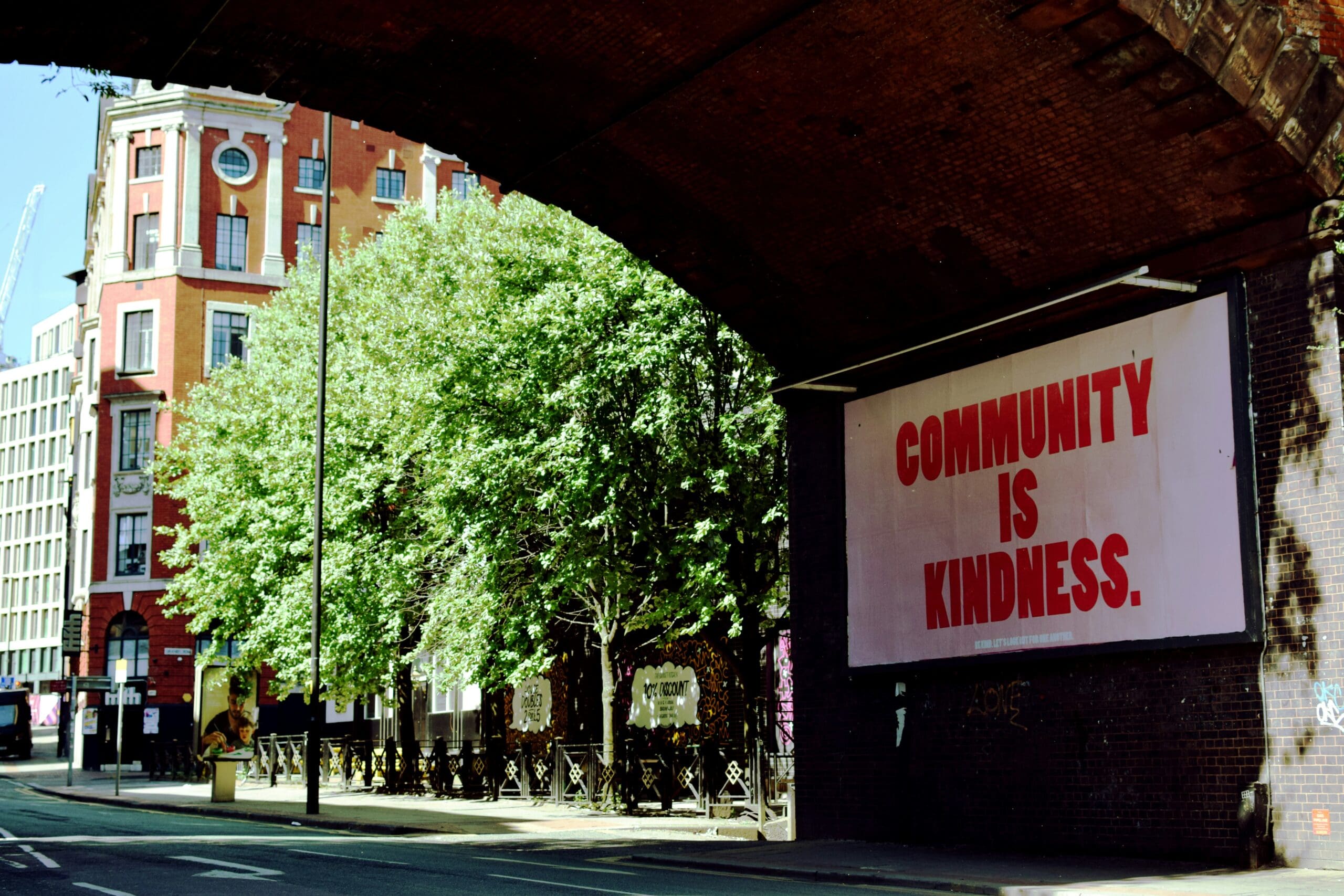
Why real growth is about what we support, not just what we add.
When we talk about “revitalizing” or “improving” a community, the conversation usually starts with cranes in the sky. We talk about new condos, luxury retail, and the sudden influx of outside capital. In the traditional developer’s playbook, growth is a math equation: New Buildings + Higher Property Value = Success.
But if you’ve spent any time on the ground, you know that math doesn’t always add up for the people already living there.
True community growth isn’t just about physical expansion; it’s about structural strengthening. It’s the difference between planting a fake tree in a concrete lobby and actually nourishing the soil of the neighborhood.
Here is what the research (and the reality) tells us about how places actually get stronger.
1. Relationships are the Real Infrastructure
We tend to prioritize “hard” infrastructure such as roads, bridges, high-speed rail. But the most important infrastructure in a neighborhood is “soft”: it’s the social connection between neighbors.
When people actually know and trust one another, they create a safety net that no government program can replicate. They look out for each other’s kids, they check on the elderly during a heatwave, and they show up to local meetings to advocate for their street.
Gentrification often disrupts this. When “growth” moves too fast, it snaps these existing social ties. If the new residents don’t talk to the old ones, you haven’t built a community; you’ve just built a very expensive hallway. Growth is relational, not just physical.
2. Participation Requires a Key, Not Just an Open Door
You can’t say a community is growing if the people living there can’t get to the table. Access is the bridge to participation. This means:
- Can people physically get to the new opportunities (Transportation)?
- Is the information about changes easy to find, or is it buried in a PDF on page 40 of a city website?
- Do residents have a seat at the table where the actual decisions are made?
When participation is limited to those with the most time or the most money, growth becomes uneven. It becomes something that happens to a community, rather than with it.
3. Build from Strengths, Not Deficits
Traditional development models are obsessed with what a neighborhood lacks. They see a “food desert” or a “blighted block” and try to fix it from the outside.
A more professional—and frankly, more effective—approach is Asset-Based Development. This means starting with what is already working. Who are the local leaders the neighbors already trust? What are the informal networks keeping people afloat? What are the cultural landmarks that give the area its soul?
When you start with the assets that already exist, growth becomes sustainable and, more importantly, community-owned. You aren’t “saving” a neighborhood; you’re investing in its existing potential.
4. Environment Over Speed
We live in an era of “disruptive” growth that wants results by next quarter. But human systems don’t work like software updates.
Real, lasting change happens gradually. It requires a stable environment where trust has time to grow. This means prioritizing investment that stays local—supporting the legacy business that’s been on the corner for 20 years instead of just chasing the trendy chain that might leave in five.
When the conditions are right—stability, clear communication, and resident leadership—growth follows naturally. You don’t have to force it; you just have to stop stifling it with a “move fast and break things” mentality.
5. From Residents to Co-Creators
The strongest communities are those where the people don’t feel like “recipients” of services, but co-creators of their environment.
When a resident feels a sense of ownership, they don’t just live in a neighborhood—they steward it. They maintain the programs, they mentor the youth, and they ensure that progress continues long after the initial grant funding has dried up.
This is the “Connective Tissue” of the neighborhood. It’s what turns a collection of houses into a home.
Rethinking the Goal
Growth is not just expansion. It’s the process of creating conditions where people can contribute, collaborate, and build together.
It looks like:
- A local idea turning into a neighborhood initiative.
- A vacant lot becoming a shared garden where people actually linger.
- Long-time residents becoming the leaders of the new changes.
Progress shouldn’t feel like a takeover. It should feel like an evolution. And when we support communities intentionally, we build something that actually lasts.
